THE GIRL WHO LEARNED TO APOLOGISE TO HER BODY
When Menstrual Pain Becomes a Language Nobody Wants to Understand
By Adaba Mercy Yakubu
The Apology Nobody Heard
The first time Amara apologised to her body, she was fifteen.
It was a Tuesday morning, and the classroom was unusually quiet. Her mathematics teacher was explaining an equation on the board when a familiar pain began to crawl through her lower abdomen.
At first, she ignored it.
She had become quite good at pretending that certain things were not happening.
She pressed her thighs together, adjusted her sitting position, and tried to concentrate on the numbers dancing across the board.
But the pain grew stronger.
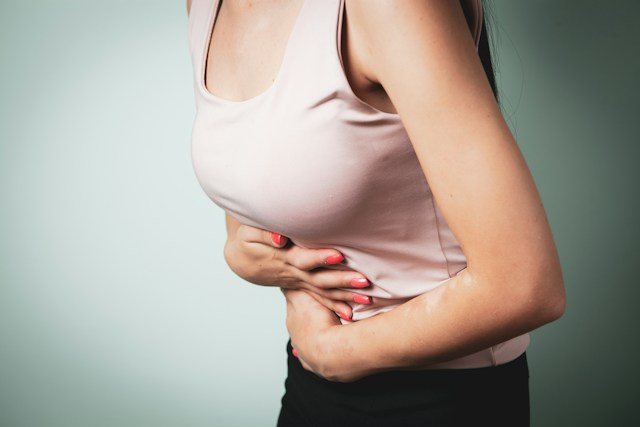
It felt as though someone had reached into her stomach and was twisting something that did not belong to them.
“Amara, what is the answer?”
She stood up.
The classroom suddenly felt smaller.
Her lips parted, but no words came out.
“Are you sleeping in my class?”
A few students laughed.
She shook her head.
“Then answer the question.”
Amara lowered her eyes.
She wanted to explain that her body was fighting a battle she did not understand. She wanted to say that standing upright was becoming difficult and that the pain travelling down her back was making her legs feel weak.
Instead, she whispered, “I’m sorry, sir.”
That was the first apology.
But it would not be the last.
A Body That Became an Inconvenience
By seventeen, Amara had developed a routine.
Whenever her period approached, she prepared herself for two things: the pain and the explanations.
She explained why she could not attend certain activities.
She explained why she needed to sit down.
She explained why she was unusually quiet.
She explained why she sometimes struggled to eat.
And when people grew tired of her explanations, she apologised.
“Sorry, I’m not feeling too well.”
“Sorry, I need to rest.”
“Sorry, I can’t come today.”
It was strange how something happening inside her own body required so much permission from the world around her.
Her mother often reminded her that menstruation was part of womanhood.
“Every woman goes through it, Amara. You just have to be strong.”
And Amara believed her.
After all, what did she know?
She had grown up hearing that menstrual pain was something women were expected to endure.
Nobody had told her that although mild cramps can be common, severe menstrual pain that interferes with everyday activities deserves medical attention.
Nobody had explained that a regular monthly occurrence was not automatically a healthy one.
So she endured.
And because she endured, everyone assumed she was fine.
The Day Her Body Refused to Be Silent
At nineteen, Amara was in her second year at the university.
She had an important presentation that morning.
For two weeks, she had prepared extensively, researching her topic, arranging her points, and rehearsing before her mirror.
But when she woke up, her bedsheet was stained.
Her period had arrived.
And with it came the familiar pain.
She took a pain reliever she had used before, hoping it would help, but the discomfort continued.
She dressed slowly, holding the edge of her bed whenever the cramps became unbearable.
By the time she arrived at the lecture hall, she was sweating.
Her friend Zainab noticed immediately.
“Amara, are you okay?”
She nodded.
“I’m fine. It’s just my period.”
Zainab looked at her for a moment.
“Why do you always say ‘just’ when you’re clearly suffering?”
Amara forced a smile.
“Because it’s normal.”
Zainab did not smile back.
“Who told you that suffering this much is normal?”
For some reason, that question stayed with her.
Not because it was complicated.
But because nobody had ever asked her before.
Halfway through her presentation, Amara felt dizzy.
She stopped speaking.
Her hands trembled against the paper she was holding.
And for the first time in years, she did not apologise.
She simply said, “I need help.”
The Question That Changed Everything
A few days later, Amara visited a healthcare professional.
She expected to be told what she had heard all her life.
It’s normal.
You’ll get used to it.
You’re a woman.
Instead, the healthcare professional listened.
She asked about the intensity of the pain, how long it lasted, the amount of bleeding, and whether the symptoms interfered with Amara’s daily activities.
Then she asked a question Amara had never considered.
“How long have you been experiencing this?”
“Since I was fifteen.”
“And you’ve been managing it alone?”
Amara nodded.
The healthcare professional explained that painful periods, medically called dysmenorrhea, can have different causes. Some menstrual cramps occur without an underlying pelvic disease, while others may be associated with conditions such as endometriosis, adenomyosis, or fibroids.
Severe pain did not automatically mean Amara had any of these conditions, but it was a reason to investigate rather than dismiss her symptoms.
Further assessment would help determine what care she needed.
For the first time, Amara understood something important.
Her pain was not a test of her strength. It was a symptom worthy of attention.
She had spent years trying to prove that she could endure something she should have been allowed to discuss.
Beyond the Blood We See
When conversations about menstrual health arise, they often begin and end with sanitary pads, hygiene, and access to menstrual products.
These conversations are necessary.
A girl who cannot afford menstrual products deserves support. A student who lacks access to clean toilets, water, and privacy deserves better facilities.
But menstrual health extends beyond the products used to absorb blood.
It includes physical comfort, emotional well-being, accurate information, access to healthcare, and the freedom to discuss menstrual experiences without shame.
It also includes understanding that menstrual experiences differ.
Some people experience mild discomfort. Others experience heavy bleeding, irregular cycles, severe cramps, or emotional changes that significantly affect their daily lives.
Heavy menstrual bleeding can sometimes contribute to iron-deficiency anaemia, while persistent or worsening menstrual pain may require medical evaluation.
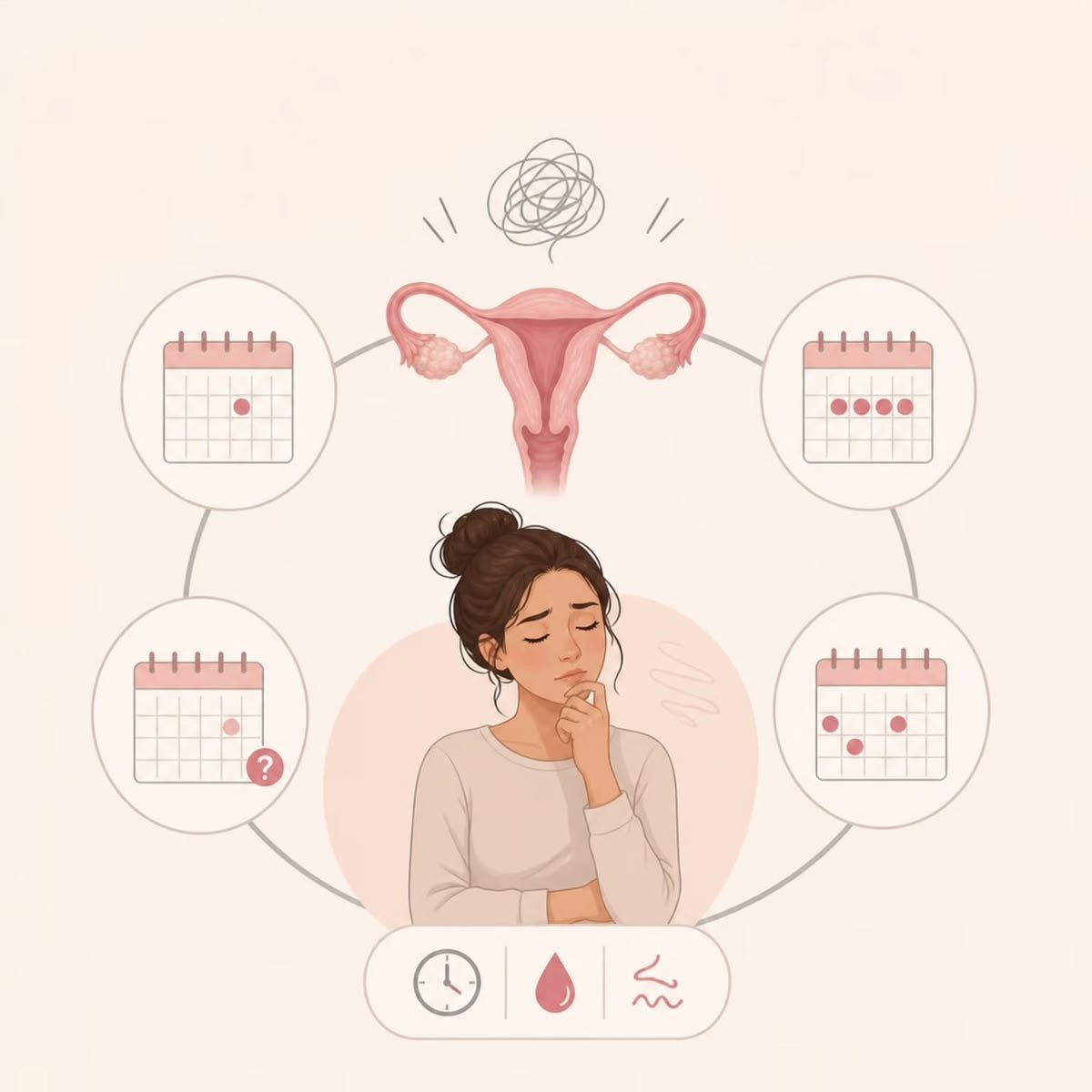
A menstrual cycle is not merely a date circled on a calendar.
It can offer useful information about reproductive and general health.
And learning to pay attention to that information is not an act of weakness.
It is an act of self-awareness.
The Silence We Inherit
There is another part of Amara’s story that deserves attention.
Nobody deliberately taught her to neglect her health.
Her mother repeated what she had been taught.
Her teachers responded according to what they understood.
Her friends accepted the explanations they had grown up hearing.
And Amara inherited a culture in which enduring pain was sometimes mistaken for maturity.
This is how silence travels.
Not always through cruelty.
Sometimes through ordinary conversations.
Through a mother who says, “I went through it too.”
Through a teacher who assumes a girl is exaggerating.
Through a friend who says, “It’s only your period.”
Through a society that celebrates women’s resilience without always questioning why they are expected to endure so much.
But resilience should never become an excuse for neglect.
We must begin to distinguish between teaching girls to be strong and teaching them to ignore their bodies.
A girl should know that she can track her cycle, recognise changes in her bleeding patterns, seek medical advice for unusual symptoms, and ask questions without embarrassment.
She should also know that menstrual pain is not a competition.
Nobody deserves more recognition because they suffered silently.
A Different Kind of Strength
Months after her first healthcare visit, Amara began keeping a menstrual journal.
She recorded when her period started, how long it lasted, the severity of her cramps, and any symptoms that accompanied them.
She followed the medical guidance she received and continued seeking care when necessary.
But the greatest change was not in the pages of her journal.
It was in the way she spoke about herself.
One afternoon, her younger sister approached her.
“Amara, does having your period always have to hurt?”
Amara looked at the girl standing before her.
She remembered the fifteen-year-old version of herself, trembling in a classroom and apologising for pain she could barely understand.
She remembered the years she spent believing silence was strength.
Then she smiled gently.
“Not everyone experiences period pain, and some cramps can be normal. But if the pain is severe or stops you from doing your usual activities, you deserve to be checked.”
Her sister nodded.
“Even if people say I’m exaggerating?”
“Especially when people make you feel that way.”
And in that moment, something changed.
Amara could not rewrite her own teenage years.
But she could help her sister grow up with a different understanding of her body.
The Apology We Must Stop Teaching
Somewhere today, a girl is sitting in a classroom, silently enduring menstrual cramps because she is afraid of being called dramatic.
Another is missing school because she cannot afford menstrual products.
Another is experiencing unusually heavy bleeding but has been told that it is simply part of growing up.
And somewhere, a young woman is apologising for needing rest.
These experiences may look different, but they reveal the same problem: menstrual health is still too often treated as something to manage quietly rather than understand openly.
We cannot build a society that supports girls while ignoring the realities of their bodies.
Menstrual health education must go beyond explaining how to use a sanitary pad. It must teach girls what changes to expect, which symptoms deserve attention, how to practise safe hygiene, and when to seek professional care.
Parents must create room for questions.
Schools must create environments where menstruating students can access basic facilities and support without humiliation.
Healthcare systems must take menstrual concerns seriously.
And society must stop treating silence as evidence of strength.
Because the goal is not to raise girls who can endure everything.
The goal is to raise girls who understand that they do not have to endure everything alone.
Final Reflection: Dear Body, I Am Listening
Years later, Amara opened the old notebook in which she had once written her school assignments.
On the last page, beneath a faded mathematics exercise, she found a sentence she barely remembered writing.
I wish my body would stop disappointing me.
She stared at the words for a long time.
Then she picked up her pen and wrote underneath them:
Dear body,
I am sorry it took me so long to understand that you were not trying to disappoint me.
You were trying to tell me something.
And this time, I am listening.
Perhaps that is where menstrual health awareness should begin.
Not only with conversations about blood, cramps, pads, and calendars.
But with a simple understanding that every girl deserves to recognise her body’s signals without shame, fear, or dismissal.
Because menstruation should never teach a girl to apologise for existing in her own body.
Her body is not an inconvenience. Her pain is not a character flaw. And her health should never be the price she pays to prove that she is strong.
⸻
Author’s Note: Amara is a fictional character created to reflect menstrual-health experiences that many girls and young women may recognise. This story is intended to encourage awareness, informed conversations, and timely healthcare seeking. It is not a substitute for medical diagnosis or treatment.