As a child, for some odd reason, I had always been the kind of person who spoke her mind, especially when I knew what I was saying was true.
Then came 2015.
I can still remember being in JSS2 when my friend Lisa had been absent from school for two consecutive days, I was getting worried, so I asked my classmate, Patricia, if she knew what was happening.
"Lisa has started seeing her period, that's why she hasn't been in school, but she'll be around by next week," she told me.
Later that day, during mathematics class, our teacher asked about Lisa's absence.
"She's not feeling fine, sir," Patience replied.
I found it strange that she was giving a different explanation from the one she had given me. Without thinking twice, I protested.
"That's a lie, sir! She has started seeing her period. That's why she hasn't been coming to school."
Our mathematics teacher immediately reprimanded me.
"It is wrong of you to expose her like that, that's a thing of secrecy, you don't say it out loud."
I was stunned!
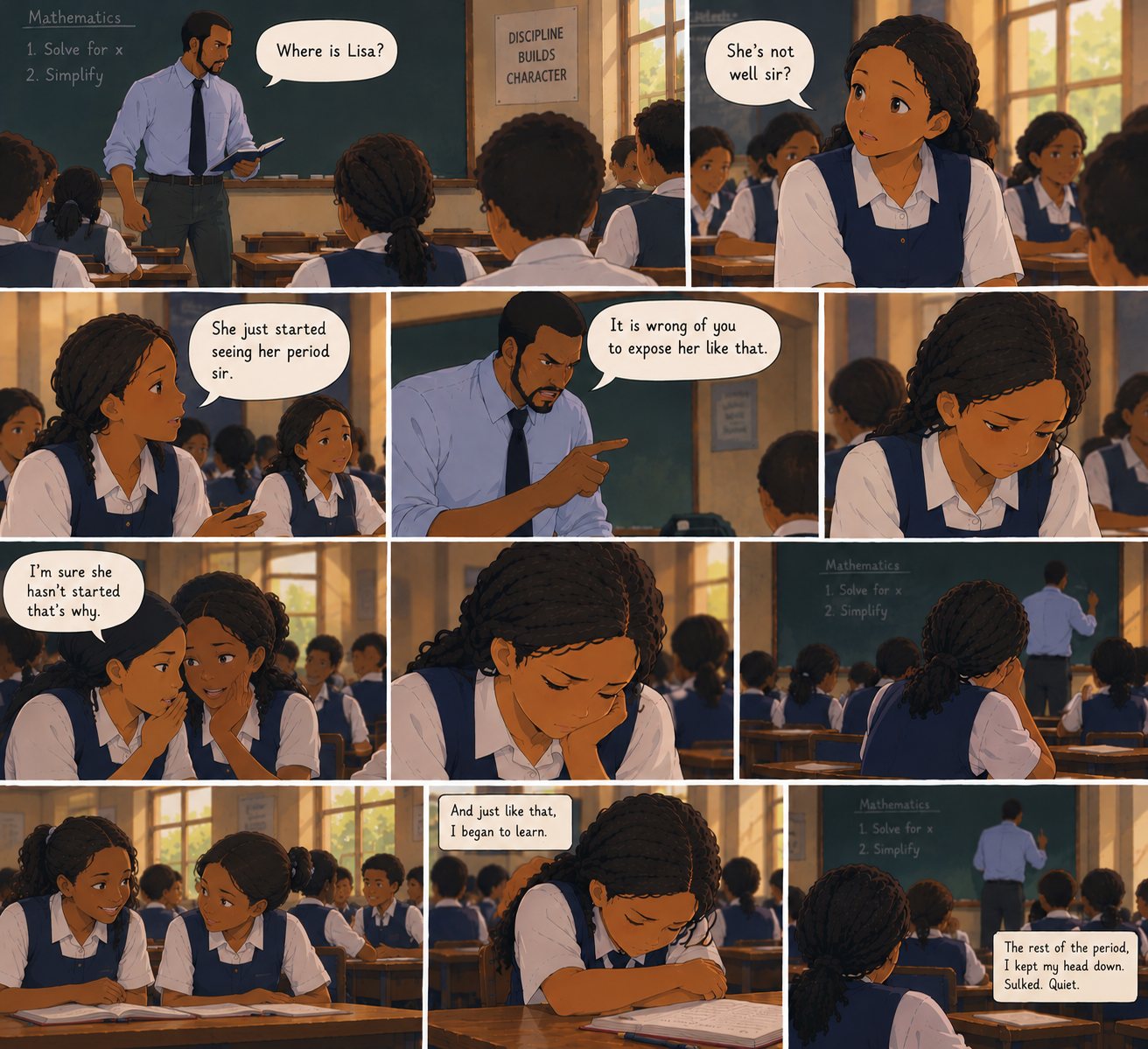
I genuinely did not understand what I had done wrong, I sulked throughout the rest of the period, wondering how something I considered an ordinary explanation had suddenly become an offence.
My classmates made matters worse, they acted as though I was being childish for talking about menstruation so openly. One of them even said, "I'm sure she hasn't started that's why she doesn't know you don't talk about these things."
After school, a senior student called me aside to explain that menstruation was not something to talk about proudly, according to her, it was a secret and should not be discussed loudly.
And just like that, I began to learn;
I learned to reserve conversations about menstruation for private moments. I learned that although it was a natural part of growing up, it was also something I was expected to keep quiet about.
When my father was transferred to Lagos and I changed schools, things were slightly different. Menstruation was still discussed privately, but there was a little more room for conversation. My biology teacher encouraged us to talk about it, explaining that it was a natural process that girls would experience as they grew.
Through those lessons and conversations with my friends, I gradually learned more about the female reproductive system and the changes our bodies would undergo.
But even then, I did not fully understand how deeply the silence surrounding menstruation could affect a girl.
Up until years later.
When Silence Becomes Shame.
Growing up as the first child in my family, I understood the importance of creating a safe space for my younger sister. I wanted her to be able to ask questions without fear or embarrassment. So, even before she started menstruating, we talked about the female reproductive system and the changes she could expect as she grew older.
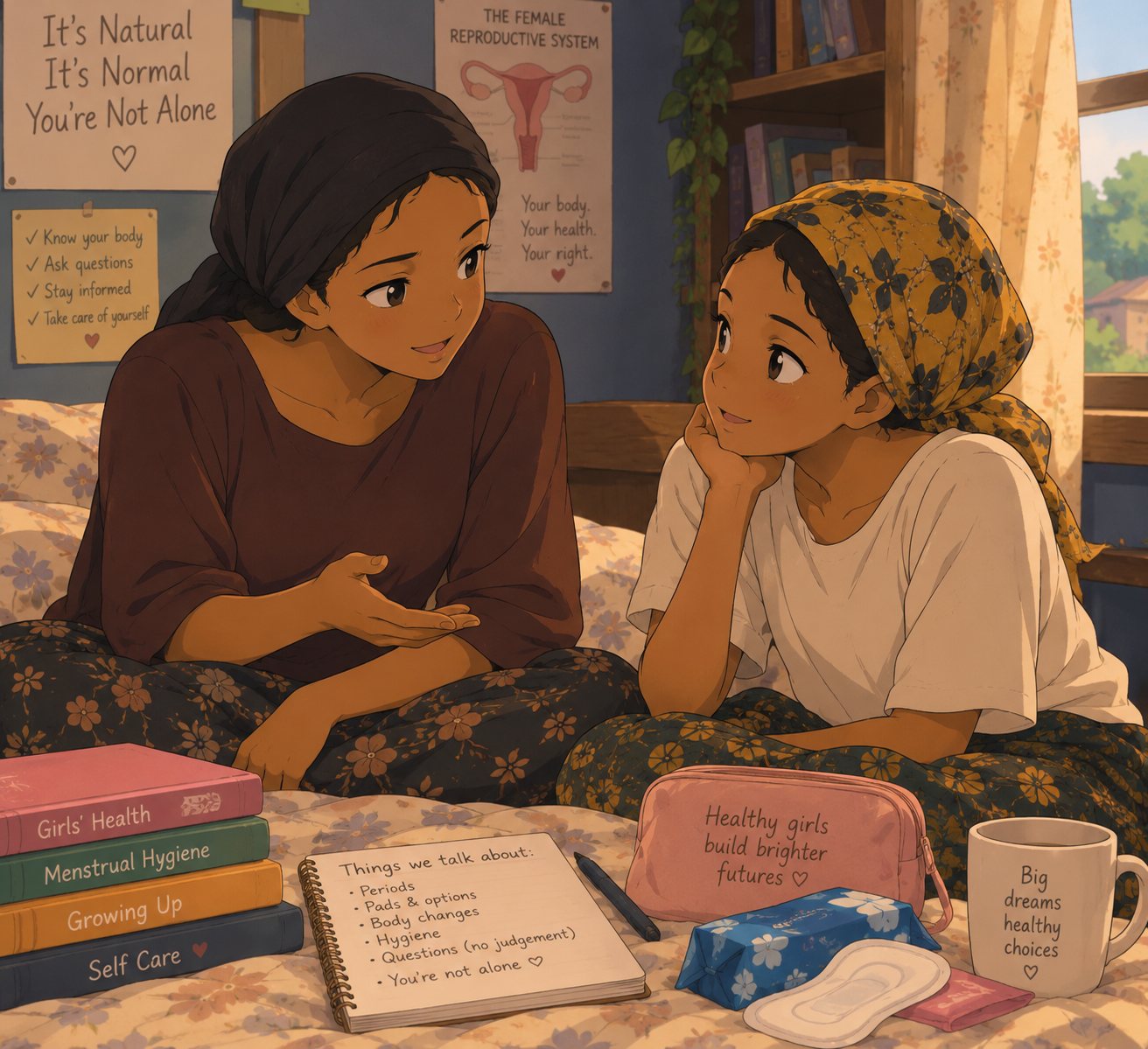
I wanted her to understand her body and know that it was not something she needed to be ashamed of.
Later, after we moved to Adamawa, a cousin came to stay with us. She shared a room with my younger sister.
A few days into her stay, my cousin started menstruating.
She had no sanitary pads and resorted to tearing pieces from her wrapper to manage her period.
One day, my sister noticed bloodstains on the floor and asked her if she was menstruating, my cousin admitted that she was.
When my sister asked why she was not using sanitary pads, she explained that she did not have the money to buy any.
My sister encouraged her to tell me, but she refused. She was too ashamed to ask me for something as basic as sanitary pads.
My sister suggested that she tells our mother instead, but she was reluctant to do that, too. Eventually, my sister threatened to tell me herself. My cousin pleaded with her not to, and they reached an agreement: she would tell someone herself.
But she didn't.
The following morning, while my cousin was sweeping the house, my mother noticed the bloodstains and asked her what had happened.
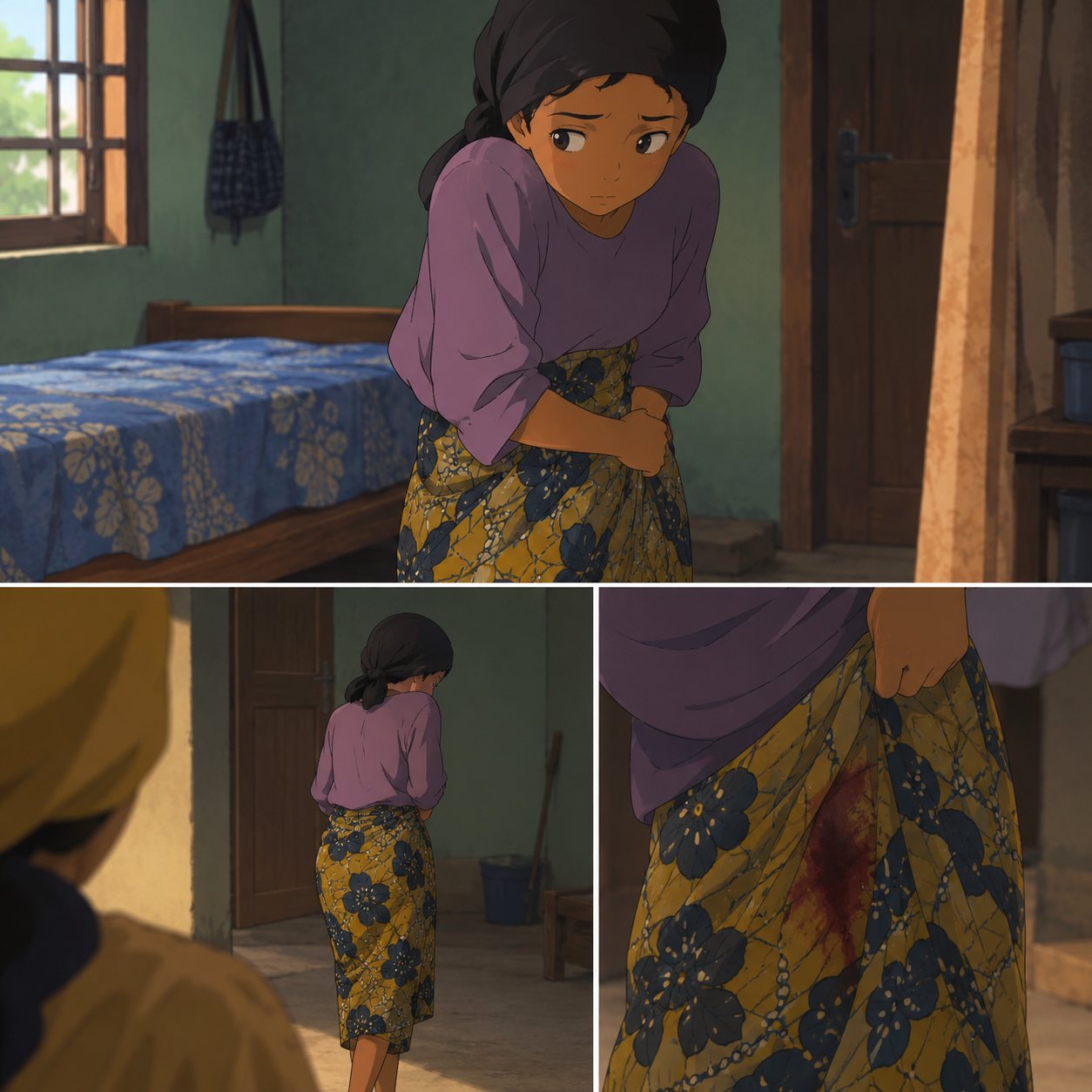
My cousin explained that she was menstruating but had been too ashamed to say anything.
My mother gave her sanitary pads and tried to reassure her. She explained that they we're all women and that there was nothing to be ashamed of.
Yet, even after their conversation, my cousin struggled to meet my mother's eyes.
I was fascinated by this, but more than anything, I was troubled.How could someone be so ashamed of something as natural as menstruation that she would rather struggle without sanitary pads than ask for help?
I began asking my cousin more questions and discovered that she knew very little about menstruation and the changes happening in her body. Worse still, she did not seem to have anyone she felt comfortable approaching for answers.She was experiencing a normal biological process, yet she lacked the knowledge, resources, and confidence to manage it comfortably.
And that was when I began to question something I had accepted for years.
Beyond One Girl's Experience
My cousin's experience made me wonder how many other girls were navigating menstruation with little information, inadequate resources, or no one they felt comfortable approaching.
I could not assume that her experience was shared by every girl in Northern Nigeria. But I could not ignore the questions it raised, either.
Partly growing up in the west and later living in Adamawa, I began to think more deeply about the conversations we have with girls about their bodies, the information we give them, and the attitudes that shape how they respond to menstruation.
In some families and communities, menstruation remains a subject people are reluctant to discuss openly. Sometimes, this reluctance is rooted in a desire to protect a girl's privacy. In other situations, however, the message a girl receives may go beyond privacy: she may begin to believe that menstruation itself is embarrassing or that asking questions about her body is inappropriate.
There is an important difference between the two.
A girl's menstrual experience is personal, and she deserves to have her privacy respected. But protecting her privacy should not mean denying her information, making her uncomfortable about her body, or leaving her without support when she needs it.
Research conducted by UNICEF and other organizations has documented menstrual health challenges in Nigeria, including inadequate information, limited access to menstrual materials, and difficulties managing periods in environments without suitable water, sanitation, and hygiene facilities.
The challenges are also documented in Northeast Nigeria.
A 2024 menstrual health monitoring assessment covering six local government areas in Adamawa, Borno, and Yobe found that approximately 62 per cent of the women and girls surveyed reported lacking money to buy menstrual materials during their last period.
This finding is particularly significant because it reminds us that menstrual health is not only about what girls know. It is also about what they can afford and the resources available to them.
For a girl who lacks sanitary pads, knowledge alone may not solve her immediate problem. And for a girl who is too embarrassed to tell anyone what she needs, even the presence of supportive people around her may not be enough if she does not feel safe approaching them.
My cousin's experience brought these two realities together.
She needed sanitary pads, but she also needed to feel that asking for them was acceptable. She needed information about menstruation, but she also needed an environment where asking questions would not make her feel exposed or inadequate.
Her experience was personal. The questions it raised, however, reach beyond one household.
What Are We Teaching Our Girls?
I often wonder what would have happened if my cousin had continued to struggle in silence.
What if my mother had not noticed the bloodstains? What if my sister had not asked questions? What if there had been no sanitary pads available in the house?
These questions remind me that we cannot rely on chance encounters or the occasional observant adult to ensure that girls receive the information and resources they need.
Menstrual health education must begin before a girl's first period, not after she has experienced the confusion, fear, or embarrassment of managing it without adequate preparation.
Parents should be able to discuss menstruation with their daughters in age-appropriate, understandable ways. Schools should provide accurate information about puberty, menstruation, menstrual hygiene, and the female reproductive system. Teachers should create environments where questions can be asked respectfully without ridicule.
Communities also have a role to play.
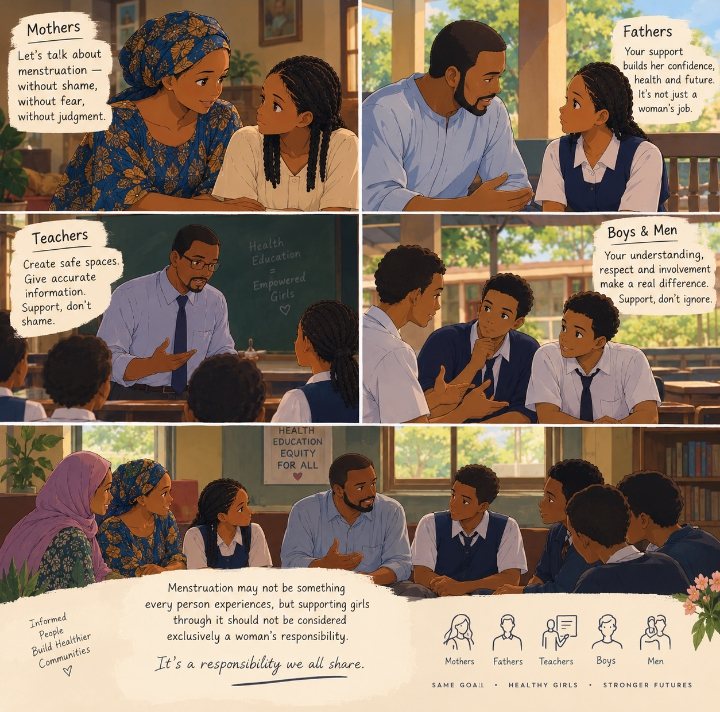
We need to create room for conversations that include mothers, fathers, teachers, boys, and men. Menstruation may not be something every person experiences, but supporting girls through it should not be considered exclusively a woman's responsibility.
We must also recognize that education cannot replace access to essential menstrual products. Girls need affordable sanitary materials, clean water, suitable toilets, privacy, and safe facilities for changing or disposing of menstrual products. Where reusable products are used, girls need the information and facilities required to wash, dry, and store them safely.
These needs are particularly important for girls whose families face financial hardship and for those living in communities affected by displacement and conflict.
Thankfully, efforts to improve menstrual health are already taking place in parts of Northeast Nigeria. UNICEF has documented initiatives in Adamawa and neighbouring states that combine menstrual health education with practical support, including training in the production of reusable pads.
Such efforts demonstrate that change is possible when communities are given information, resources, and opportunities to participate in solutions.
But these interventions must reach girls consistently and respond to the different circumstances in which they live.
No girl should have to depend on whether someone happens to notice her distress before she receives help.
And no girl should be made to feel that her dignity depends on her ability to conceal a natural biological process.
The Conversation We Need To Have
In 2015, I was a girl who did not understand why talking about menstruation was considered wrong.
I was reprimanded, embarrassed, and eventually taught to keep such conversations private.
Years later, I encountered a girl who was so ashamed of menstruation that she could not bring herself to ask for sanitary pads, even when she needed them.
These experiences have stayed with me because they have made me question the lessons girls receive about their bodies.
What do our daughters and sisters learn when we avoid their questions about menstruation?
What do they understand when they see adults treating periods as something embarrassing?
And what happens when a girl needs help but has been conditioned to believe that asking for it is shameful?
I do not believe that every parent, family, or community in Northern Nigeria teaches girls to be ashamed of menstruation. Nor do I believe that culture alone explains the challenges girls face. Financial hardship, inadequate school facilities, limited access to health information, and other structural barriers also matter.
But I believe we must be willing to examine the messages we communicate, intentionally or otherwise, and consider their consequences.
We can teach girls to respect their privacy without teaching them to hide in shame. We can uphold our values while ensuring that girls receive accurate information about their bodies. We can respect cultural differences while questioning practices that leave girls uninformed, unsupported, or unable to meet their basic menstrual health needs.
Menstruation should not be a source of humiliation. It should not be a reason for a girl to miss school, endure discomfort in silence, or feel that she cannot ask for help.
Most importantly, it should not be a subject a girl is expected to navigate alone.
I think back to the girl I was in JSS2, speaking without hesitation because I did not yet understand the shame attached to a conversation about periods.
Perhaps I did not know how to approach the subject with the sensitivity that another person's privacy deserved. But I also wonder what might have happened if, instead of being told that menstruation was a secret, I had been taught how to discuss it with both respect and confidence.
Maybe that is where the change begins,not by forcing every girl to speak openly about her period, but by ensuring that she never feels ashamed to seek the information, resources, or support she needs.
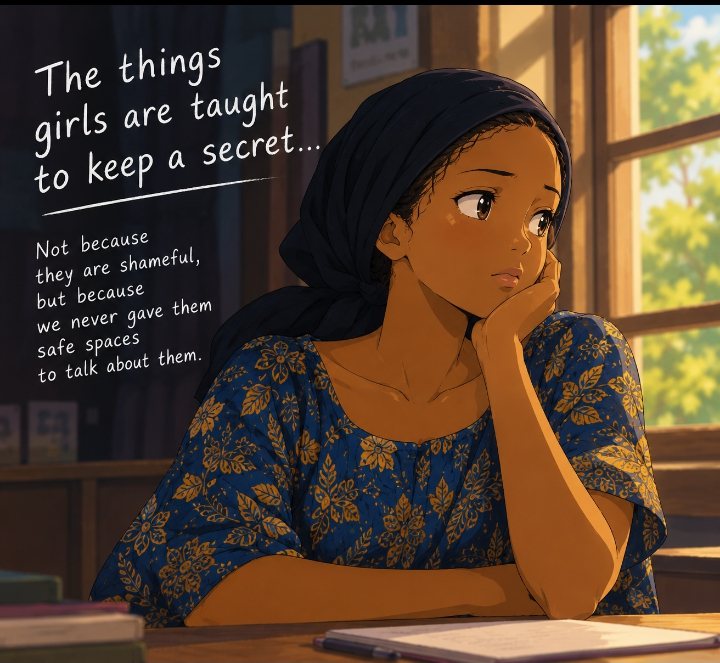
Because there is a difference between teaching a
girl that her body is personal and teaching her that her body is a secret.
And no girl should have to suffer in silence because we failed to teach her the difference.